
Swimmer's Shoulder: Causes and Warning Signs
Need help with this? Book a physio at The Physio Crew Keilor.
Book Now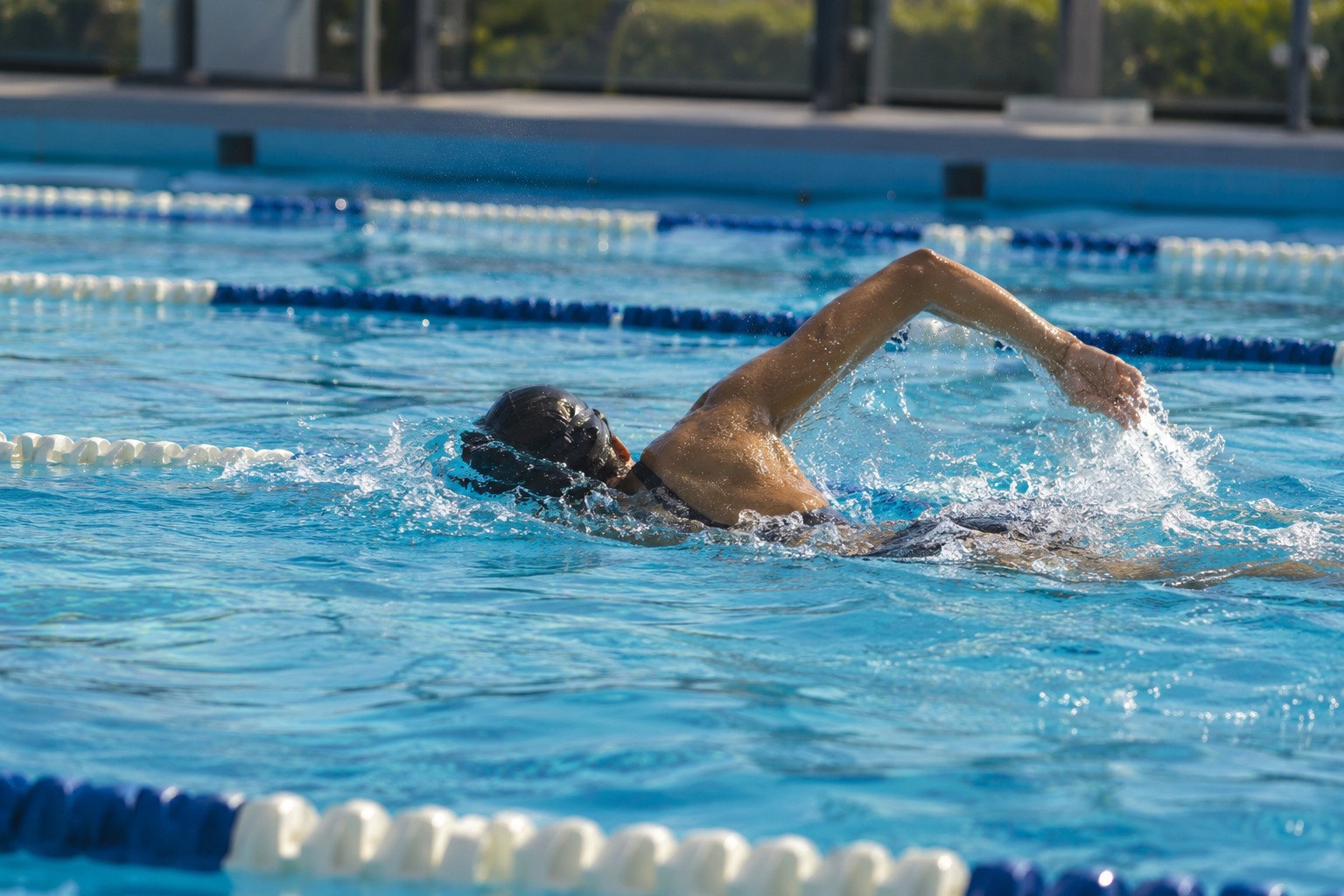
Swimmer's Shoulder: Staying in the Pool This Summer
THE PHYSIO CREW · SHOULDER SERIES: PART 8 OF 9
Why shoulder pain shows up when the weather warms, and how to catch it before it costs you the season
Every year as the weather warms up, outdoor pools fill, open water squads restart and triathlon training ramps up. And every year we see the same pattern a few weeks later: shoulders that were fine in winter starting to ache through the pull phase.
Swimmer's shoulder isn't a single diagnosis. It's a catch-all for shoulder pain driven by the repetitive overhead load of swimming, and it pulls together almost everything we've covered in this series.
Why Swimming Is Hard on the Shoulder
A single session of freestyle, butterfly or backstroke can involve thousands of overhead arm cycles. When that repetition outpaces what the shoulder is ready for, the rotator cuff tendons from Part 2 usually take the load first. Shoulder blade control from Part 3 and the joint laxity we discussed in Part 1 can both play a part.
Why It Tends to Show Up Now
Training volume often jumps quickly after a quieter winter. Squads add paddles, pull buoys and longer sets. Triathletes add swim sessions on top of riding and running. A rapid increase in load is one of the most common triggers we see for shoulder pain in swimmers.
The Contributing Factors We Look For
Sudden increases in weekly distance or number of sessions
Heavy hand paddle use, which increases load on the shoulder
Breathing to one side only, which can change body roll and arm entry
Hand entry crossing the midline during freestyle
Reduced rotator cuff and shoulder blade strength or endurance
Limited trunk rotation, which pushes more work onto the shoulder, the kinetic chain link from Part 4
Early Warning Signs
Pain at the front or top of the shoulder during the pull or recovery
Pain starting earlier in each session
Aching after sessions or at night
Changing your stroke to avoid pain
The earlier this gets addressed, the less time you usually spend out of the water.
How We Help Swimmers
We look at shoulder movement, strength, shoulder blade control and trunk rotation alongside your training program. A typical plan might include:
Adjusting volume, paddle use and stroke mix for a period
Rotator cuff and shoulder blade strengthening, progressed towards swimming endurance
Thoracic and trunk mobility to support body roll
Hands-on treatment where clinically appropriate
Flagging technique points worth reviewing with your coach
Dynamometry measures shoulder rotation strength on each side, and retesting through the season shows whether capacity is keeping up with your training.
When to Get Assessed Promptly
Get checked sooner if the shoulder feels like it slips or partly dislocates, if pain comes with pins and needles or numbness down the arm, if you notice clear weakness, or if pain is present at rest or at night.
A Few Things Worth Unlearning
"Swimming is low impact, so it can't really injure my shoulder."
Swimming is low impact on the joints of the legs, but the shoulder handles a very high number of repetitions under load.
"It's just tightness. I'll stretch it out."
Swimmer's shoulder is usually a capacity and load problem. Stretching alone rarely addresses it.
"I need to stop swimming completely until it's gone."
Many swimmers can keep training with reduced volume, fewer paddles and a modified stroke mix while the shoulder settles.
A Quick Self-Check (Not a Diagnosis)
Has your weekly swim distance increased noticeably in the last month?
Are you using paddles more than you were in winter?
Is the pain starting earlier in each session?
Do you breathe mostly to one side?
If you answered yes to a couple of these, it's worth adjusting your training and getting your shoulder assessed before the season really builds.
Want to keep your summer swim season on track?
Book a shoulder assessment at our Keilor, Tullamarine or Carlton clinic before your training load peaks.
Frequently Asked Questions
What is swimmer's shoulder?
Swimmer's shoulder is a general term for shoulder pain caused by the repetitive overhead load of swimming. It most often involves the rotator cuff and the tissues at the front and top of the shoulder.
Can I keep swimming with swimmer's shoulder?
Many swimmers can keep training with reduced volume, less paddle work and changes to their stroke mix. Stop and get assessed if pain is sharp, builds through sessions or is present at night.
What causes shoulder pain in swimmers?
Common causes include sudden increases in training volume, heavy paddle use, stroke technique factors and reduced rotator cuff or shoulder blade strength.
How long does swimmer's shoulder take to settle?
It depends on how long symptoms have been present and how training is managed. Early changes to load and a strengthening program usually shorten recovery.
Do I need a referral to book a shoulder assessment?
No referral is required. You can book directly at any of our clinics.