
Pickleball Injuries: Achilles, Shoulder, Elbow and How to Keep Playing
Need help with this? Book a physio at The Physio Crew Keilor.
Book Now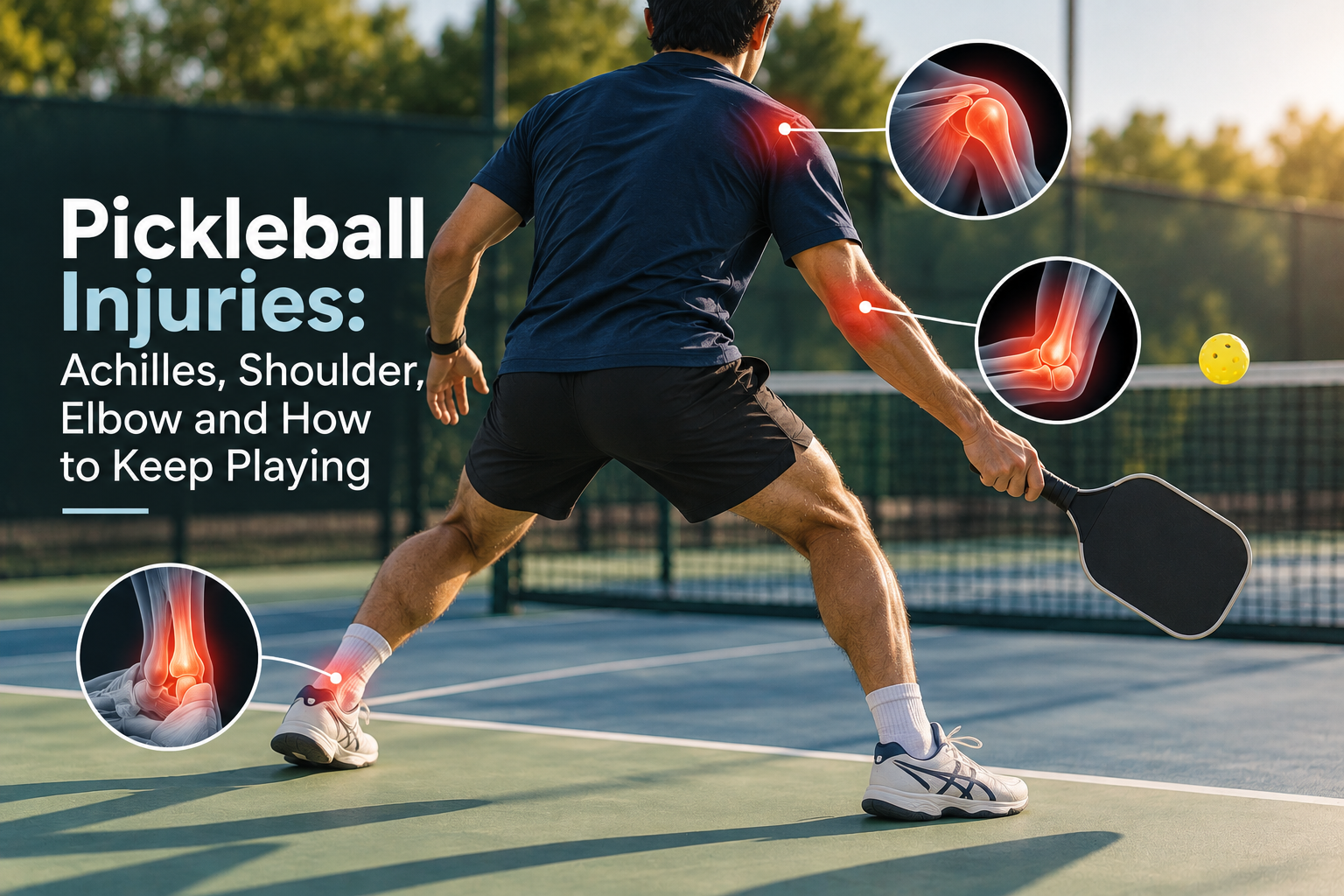
Pickleball is one of the fastest-growing sports in Australia. The Australian Sports Commission’s AusPlay survey recorded more than 155,000 Australians playing as of April 2025, up from around 92,000 a year earlier, and Pickleball Australia reported more than 27,000 members and over 410 affiliated clubs and venues in June 2026. On 7 October 2026, Tennis Australia and the National Pickleball League announced plans to convert existing tennis facilities into multi-sport racquet hubs, so more courts are on the way.
The game is easy to learn and very social, which is why so many people pick up a paddle after years away from sport. The catch is that the body does not always keep up with the enthusiasm.
At The Physio Crew, our physiotherapists help pickleball players across Melbourne recover from injury and get back on court. This guide covers what to watch for, how to lower your risk, and when to book in at our Tullamarine, Carlton or Keilor clinic.
Quick answer: The most common pickleball injuries are ankle and muscle sprains and strains, fractures from falls, Achilles tendon problems, and overuse pain in the shoulder and elbow. Risk is higher from age 50 and when you are new to the sport or returning after a break. Warm up properly, wear court shoes, build up gradually and add strength and balance work off the court. See a physiotherapist if pain lasts more than a few days. A sudden pop at the back of the ankle needs prompt medical assessment.
Why a low-impact game still injures people
Pickleball has a gentle reputation, but the court is small, rallies are quick and play involves sudden first steps, lunges and changes of direction. A 2026 systematic review of lower limb injuries in adult pickleball players found that sprains, strains and fractures were the most common injuries, and that Achilles tendon ruptures also featured. Falls were the leading cause, followed by running or lunging forward and rolling the foot or ankle inward. Being 50 or older was a risk factor in almost every study reviewed, and women were more likely than men to suffer fractures.
Estimates based on AusPlay data suggest more than 94,000 Australians aged 45 and over play pickleball, so the group at higher risk is also a large part of the player base.
The Achilles tendon: the injury to know about
The Achilles tendon is the thick tendon at the back of the ankle that links the calf muscles to the heel bone. It carries a lot of load when you push off to move quickly.
Speaking to the Illawarra Mercury in September 2026, Wollongong foot and ankle surgeon Dr Meghan Dares said that 68% of pickleball-related Achilles ruptures happen in a player’s first month, and around a third in the first session. She described two age peaks: athletes in their early 20s, and people aged roughly 50 to 70, often weekend warriors. This suggests that preparation matters most when you are new to the sport or returning after a break.
A small 2024 study of professional players found that pickleball involved more at-risk Achilles movements than tennis, although the authors noted that only a very small fraction of such movements ends in a rupture.
Signs of a possible rupture
A sudden sharp pain or a pop or snap at the back of the ankle or calf, sometimes described as feeling like being kicked.
Sudden weakness, with difficulty pushing off or rising onto your toes on that side.
Swelling or bruising around the heel and lower calf.
If this happens, get a medical assessment the same day through your GP or an emergency department. Do not wait to see if it settles.
Earlier warning signs
Stiffness or pain in the Achilles on your first steps in the morning or at the start of play can be a sign the tendon is struggling. This is the time to see a physiotherapist, before the problem gets worse. Our article on calf strains explains how the calf and Achilles work together.
Achilles or calf pain after pickleball? Book a physiotherapy assessment at The Physio Crew in Tullamarine, Carlton or Keilor. Book online at www.thephysiocrew.com.au/book or call your nearest clinic. Clinic details are at the end of this article.
Shoulder and elbow
Repeated swings, serves and overhead shots can overload the rotator cuff and the tendons on the outer side of the elbow. These overuse problems usually build gradually, often after a jump in how much you play. Early on they tend to feel like an ache that eases as you warm up and returns afterwards. Building shoulder and forearm strength and managing how much you play each week are central to recovery. Our guides to rotator cuff pain and tennis elbow cover these conditions in more detail.
Knees, ankles, back and falls
Sideways steps and quick pivots can roll an ankle or twist a knee, and a trip or slide can lead to a fall. The Department of Health notes that regular muscle-strengthening activity helps reduce the risk of falls and injury. Strength and balance work is a sensible part of preparing for any racquet sport.
How to lower your risk
Warm up for 5 to 10 minutes. Start with gradual movement and build up before competitive points. Calf raises, leg swings, side steps and easy shoulder circles are a good start.
Wear court shoes. Court shoes with lateral support suit the sideways movement of pickleball better than running shoes, which are built for moving forward.
Build up slowly after a break. Keep early sessions short, rotate off court when you need to and take regular drink breaks.
Train strength off the court. Focus on calves (for example single-leg heel raises), thighs and glutes, shoulder and forearm strength, and add balance practice.
Stop when something hurts. Pain that continues, or returns every time you play, is a signal to get it assessed.
Consider eye protection. Players stand close together and the ball can travel fast, so pickleball coach Blake Riolo recommends eye protection where possible.
When to see a physiotherapist
Pain that lasts more than a few days or keeps coming back.
Swelling, stiffness or a joint that feels unstable.
Returning to pickleball after an injury or surgery.
You have not played sport for years and want a check of your strength, balance and movement before you start.
A physiotherapist can find out why the problem started, treat it and set up a progressive return to play. Where it helps, objective testing such as VALD assessment can show whether one leg is lagging in strength or force output. See our guide to VALD assessment for more.
Pickleball physiotherapy at The Physio Crew
The Physio Crew is a sports and musculoskeletal physiotherapy practice with clinics in Tullamarine, Carlton and Keilor. Our physiotherapists are registered with AHPRA and use evidence-based assessment and rehabilitation. Here is how we can help you stay on the court.
Injury assessment and treatment. We assess and treat Achilles, calf, ankle, knee, shoulder and elbow problems, and find out why the injury started so it is less likely to return.
VALD strength and performance testing. All three clinics use VALD force plate and dynamometry equipment to measure strength, balance and movement. We explain your results at testing and repeat them through your program so you can see change over time.
Return-to-play planning. Return-to-sport decisions are based on measured data, so you know when your body is ready for competitive play.
Strength and conditioning. We offer rehabilitation gym access for patients on an active program and clinical small group exercise classes to build the strength and balance that protect you on court.
Remedial massage. Professional remedial massage is also available to help you recover between games.
Book your appointment and contact us
Booking takes a few minutes. Go to www.thephysiocrew.com.au/book, then choose your preferred clinic, date, time and practitioner. You can also call or email the clinic nearest you.
Physiotherapy Tullamarine
Address: Unit 1, 191 Melrose Drive, Tullamarine VIC 3043
Phone: 03 9116 8691
Email: admin@thephysiocrew.com.au
Serving: Tullamarine, Gladstone Park, Westmeadows, Airport West and Greenvale. Free on-site parking.
Physiotherapy Carlton
Address: Unit 2, 221 Drummond Street, Carlton VIC 3053
Phone: 03 9116 8693
Email: carlton@thephysiocrew.com.au
Serving: Carlton, Parkville, Fitzroy, North Melbourne and Brunswick. Walking distance from the University of Melbourne.
Physiotherapy Keilor
Address: 53 Willys Avenue, Keilor Downs VIC 3038
Phone: 03 9116 8694
Email: kd@thephysiocrew.com.au
Serving: Keilor, Sydenham, Taylors Lakes, St Albans and Hillside.
Follow The Physio Crew on Instagram and Facebook at @thephysiocrewofficial for more injury prevention tips.
Pain after pickleball? Do not wait for it to settle. Book your assessment online at www.thephysiocrew.com.au/book or call Tullamarine on 03 9116 8691, Carlton on 03 9116 8693 or Keilor on 03 9116 8694.
Frequently Asked Questions
What are the most common pickleball injuries?
Research on adult players shows sprains, strains and fractures are the most common injuries, with Achilles tendon ruptures also reported. Overuse pain in the shoulder and elbow is also commonly seen by clinicians. Falls are the leading cause of injury.
Why do Achilles tendon ruptures happen in pickleball?
Pickleball involves sudden pushing off, lunging and changes of direction, which load the Achilles tendon heavily. A Wollongong foot and ankle surgeon reported that most pickleball-related ruptures happen in a player’s first month, which points to the importance of conditioning and a gradual start.
What does an Achilles tendon rupture feel like and what should I do?
It often feels like a sudden sharp pain or a pop at the back of the ankle, followed by weakness when pushing off. Get a medical assessment the same day through your GP or an emergency department.
Is pickleball safe for people over 50?
Many people over 50 play pickleball regularly and enjoy it. Research shows injury risk is higher from age 50, so a proper warm-up, suitable shoes, gradual progression and strength and balance training are important.
What shoes should I wear for pickleball?
Court shoes with lateral support are recommended over running shoes, because running shoes are designed for forward movement rather than sideways changes of direction.
How long should I warm up before playing?
A warm-up of 5 to 10 minutes of gradual movement is recommended before high-intensity play.
When should I see a physiotherapist about a pickleball injury?
See a physiotherapist if pain lasts more than a few days, keeps returning, comes with swelling or instability, or if you are returning after an injury. A sudden pop at the back of the ankle needs urgent medical assessment instead.
Where can I see a physiotherapist for pickleball injuries in Melbourne?
The Physio Crew has physiotherapy clinics in Tullamarine, Carlton and Keilor Downs. Our physiotherapists assess and treat pickleball injuries and use VALD testing to measure strength, balance and movement.
How do I book a physiotherapy appointment at The Physio Crew?
Book online at www.thephysiocrew.com.au/book by choosing your clinic, date, time and practitioner. You can also call Tullamarine on 03 9116 8691, Carlton on 03 9116 8693 or Keilor on 03 9116 8694.
This article is general information only and is not a substitute for individual medical advice. If you think you have injured yourself, seek an assessment from a health professional.